Jezebel
Jezebel is a research-driven visual project exploring how feminine power has been historically demonized through patriarchal narratives. Drawing from ancient Phoenician culture, biblical mythology, and feminist theory, this body of work reclaims Jezebel not as a villain, but as an archetype of sovereignty, pride, and unapologetic feminine authority. Through cinematic, hyperrealistic imagery, the project interrogates how autonomy, beauty, and political influence in women were reframed as moral threat. Red becomes a language of lineage rather than sin; the gaze becomes defiance rather than seduction. Each piece functions as both critique and restoration, challenging inherited myths while offering a visual counter-memory rooted in dignity and power.
Date
2026
Category
Archetypal Feminine Studies

01 Historical Deconstruction
This work begins with careful excavation. Patriarchy is not approached as an abstract idea, but as a historical system — built, reinforced, and normalized across centuries through religion, law, language, and imagery. My research traces how feminine power was systematically reframed as threat, excess, or danger, and how women who embodied autonomy were rewritten as myths, villains, or warnings. Rather than accepting inherited narratives, this phase questions who authored them, why they endured, and what was erased in the process. History is treated not as fixed truth, but as a contested terrain where power shaped memory.
02 Archetypal Reclamation
From analysis, the work moves into reclamation. Here, feminism is not reduced to opposition, but expanded into remembrance — a return to suppressed archetypes of feminine authority, pride, sensuality, and sovereignty. Figures once condemned by patriarchal frameworks are re-examined as symbols of resistance, intelligence, and self-possession. This stage is intuitive and symbolic. Research intersects with embodiment, myth, and visual language. The feminine is allowed to exist without justification: proud, visible, adorned, defiant — not in reaction to power, but as power itself.
03 Contemporary Translation
The final element translates theory and archetype into the present moment. The work becomes visual, tactile, and experiential — transforming historical critique into contemporary expression. Art functions as a living language, capable of bypassing intellectual defense and speaking directly to perception, emotion, and recognition. These pieces do not instruct or persuade. They stand as mirrors. Inviting viewers to notice where patriarchal narratives still shape the gaze — and where feminine presence, when reclaimed, quietly dismantles them.


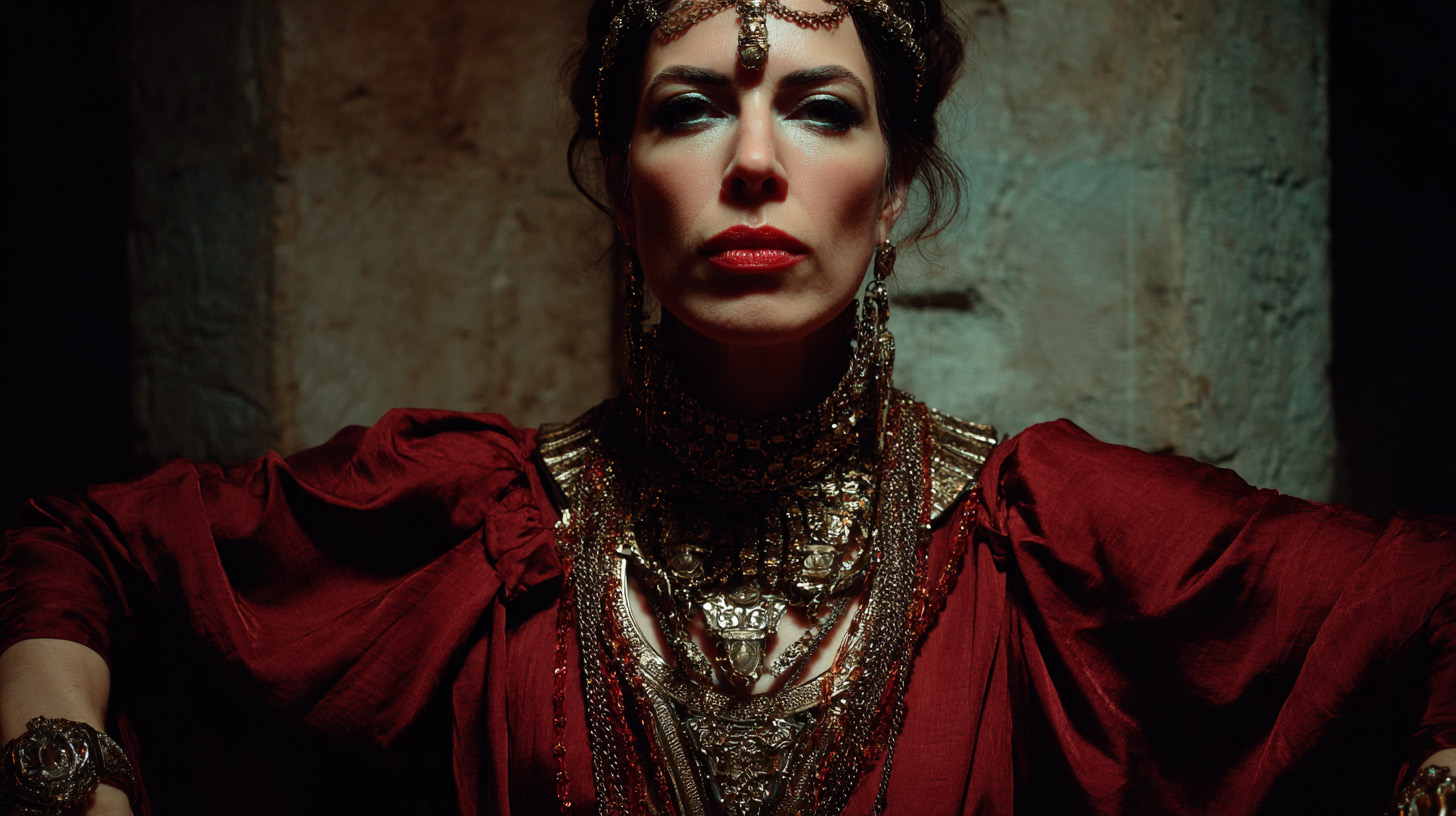


The Awakening
This work emerged from a personal and intellectual awakening — a gradual shift shaped by lived experience, long periods of introspection, and years of study into feminism, patriarchy, mythology, and archetypal psychology. What began as research slowly became recognition: an awareness of how deeply inherited narratives shape the way feminine power is perceived, regulated, and silenced. Through study and embodiment, I began to see patterns repeat across history and within myself — how pride was reframed as arrogance, autonomy as threat, visibility as danger. The awakening was not sudden or dramatic, but cumulative. It unfolded through questioning, unlearning, and reclaiming parts of the self that had been conditioned to shrink. This project is a response to that realization. Each image carries the residue of that awakening — not as revelation to be explained, but as presence to be felt. The work exists at the intersection of research and experience, where theory becomes embodied and art becomes a form of quiet resistance.
Share on